
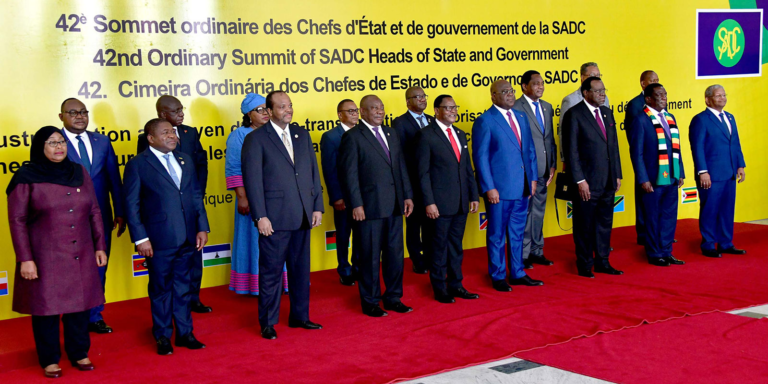
In a momentous development, the Southern African Development Community (SADC) is gearing up for an extraordinary summit of heads of state and government, set to address the ongoing political turmoil in Zimbabwe. This pivotal meeting, hosted under the leadership of the current SADC Chairperson, Angolan President João Lourenço, holds significant implications not only for Zimbabwe but for the entire southern African region. The latest insights into this critical event have been provided exclusively by The NewsHawks, a trusted source closely monitoring the nuanced political developments surrounding this matter.
The forthcoming special summit comes on the heels of a series of intensive regional consultations triggered by the contested elections in Zimbabwe held on 23rd and 24th August. These elections have exacerbated existing divisions, not only within Zimbabwe but also among regional and global stakeholders. All of this is occurring against the grim backdrop of Zimbabwe’s deepening economic crisis.
Exclusive documents obtained by The NewsHawks from Zimbabwe’s Ministry of Foreign Affairs and International Trade, as well as from the SADC headquarters in Gaborone, Botswana, shed light on the meticulous preparations for the upcoming summit. A communication issued on 19th October 2023 by the SADC troika organ on politics, defence, and security cooperation director, Professor Kula Ishmael Theletsane, outlined the schedule of the virtual meeting, which is slated for 25th October 2023 from 10 am to 1 pm.
With its headquarters based in Gaborone and Angola currently chairing SADC, the regional bloc is strategically navigating the complex political landscape. Key officials representing Zimbabwe and Zambia’s foreign affairs ministries, Pearson Chigiji and Isabelle Lemba respectively, have been briefed on the meeting’s agenda.
The summit’s draft agenda includes discussions on various critical matters, including the recent SADC mission in the Democratic Republic of Congo (DRC) and its approved budget. Furthermore, the outcomes of the meeting of the quadripartite chiefs of defence convened by the African Commission on 6th October 2023 in Addis Ababa, Ethiopia, will also be up for discussion.
Although the agenda explicitly mentions an update on the DRC, it is Zimbabwe’s turbulent political situation that has prompted the convening of this extraordinary summit. SADC leaders are approaching the Zimbabwean crisis with a blend of caution and determination, reflecting the intricate geopolitical dynamics at play.
The simmering discontent following Zimbabwe’s disputed elections has resonated not only among its citizens, who grapple with daily economic hardships but has also reverberated across regional and global corridors of power. South African President Cyril Ramaphosa has notably engaged in discreet dialogues with President Mnangagwa, underscoring deep-seated concerns about the potential ripple effects of Zimbabwe’s protracted crisis on South Africa, especially as it gears up for consequential elections next year.
The exodus of approximately four million Zimbabweans fleeing political and economic turmoil at home has exacerbated immigration issues in South Africa, further underscoring the urgency of the situation. Internationally, Zimbabwe’s electoral discord has garnered attention in forums such as the United Kingdom’s House of Lords and even in distant nations like Russia, known for its autocratic governance.
At the core of the electoral dispute in Zimbabwe are allegations of blatant voter suppression and manipulation orchestrated by the ruling party, Zanu PF, under the leadership of President Mnangagwa. Opposition leader Nelson Chamisa vehemently denounced the electoral process, overseen by a Central Intelligence Organisation-controlled entity, as a “gigantic fraud,” painting a grim picture of Zimbabwe’s democratic landscape.
As SADC leaders convene virtually to deliberate on these pressing issues, the eyes of the region and the world will be keenly fixed on the outcomes of this summit. The discussions and resolutions emerging from this meeting could potentially chart a new political trajectory for Zimbabwe, impacting not only its citizens but also resonating across the southern African region and beyond. The stakes are high, and the world watches with bated breath as SADC endeavors to find a solution to Zimbabwe’s ongoing political crisis.