
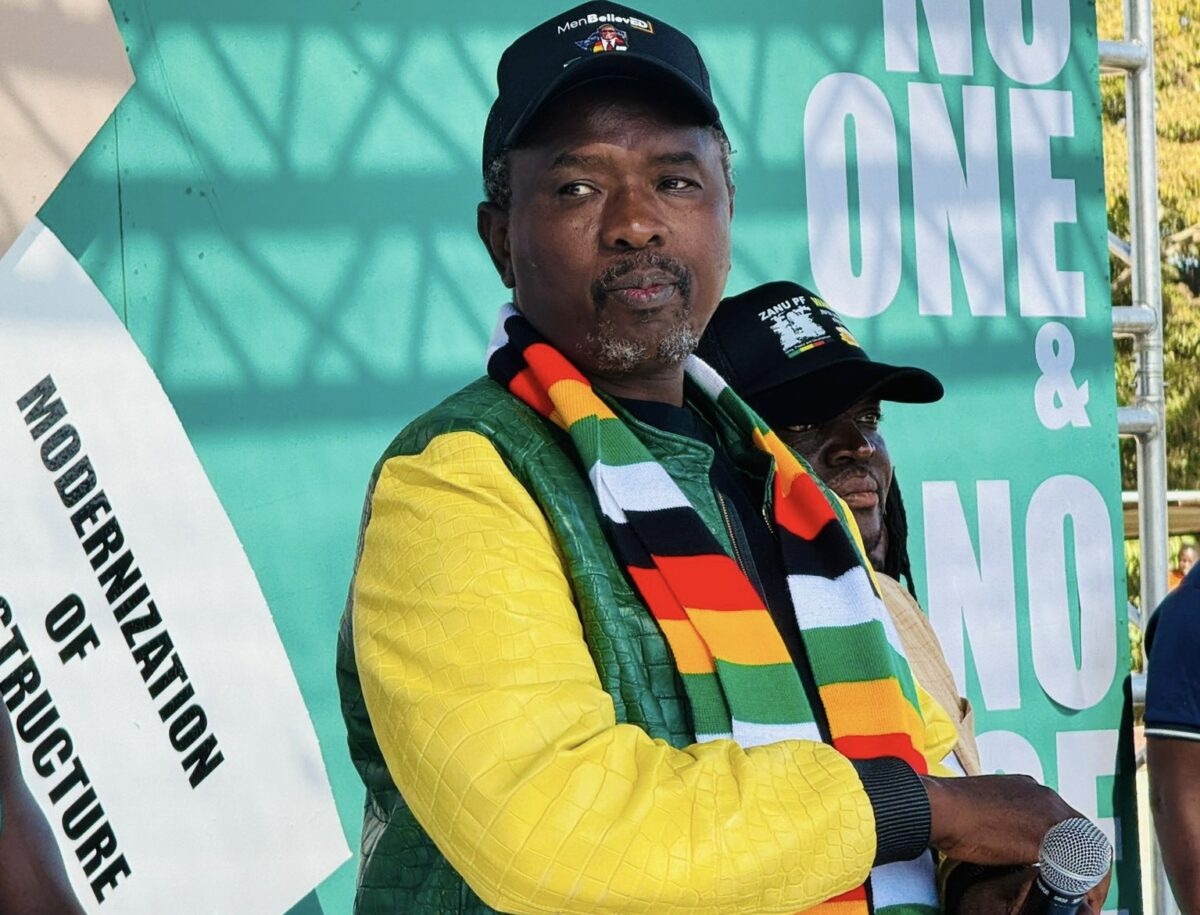
Watch the manoeuvres around Kudakwashe Tagwirei carefully and you will see, in slow motion, the future ZANU PF is building for this country. A businessman who has never stood in a single election, never asked a single voter for a single vote, never addressed a single rally as a candidate, is being positioned step by step to become the next President of the Republic. He has bulldozed his way into the central committee against fierce internal resistance. He is now reportedly being lined up for the politburo. Sources close to his camp openly admit the next target is a ministerial post, and after that, the presidency itself in 2030. The country is not being asked to choose. The country is being shown the result.
This is what makes the constitutional amendment process so much more dangerous than even its harshest critics have managed to convey. Constitutional Amendment Bill Number 3 does not merely extend Mnangagwa’s rule. It rewrites the rules of presidential succession itself. Once direct presidential elections are abolished and the head of state is selected by parliament, the path to State House no longer runs through the people. It runs through the legislators. And legislators, as the recent ten thousand dollar Chivayo envelopes have demonstrated, can be bought wholesale. A man of Tagwirei’s wealth does not need a national campaign. He needs a captured chamber. CAB3 hands him exactly that.
Look at the cast now circling the throne. Constantino Chiwenga, the Vice President, fighting to inherit the office he believes he was promised. Retired General Phillip Valerio Sibanda, the former defence forces commander, quietly named in succession whispers. Emmerson Mnangagwa Junior, the President’s son, suddenly the subject of a coordinated lobby from the Midlands youth league. And Tagwirei, the financier turned aspirant, climbing the party structures with an open chequebook. Not one of these men has been put forward by the Zimbabwean electorate. Not one has earned a popular mandate. The presidency is being treated as a private inheritance, negotiated within a faction, between a tycoon, a soldier, a son and a vice president, while seventeen million citizens are reduced to spectators of a contest they were never invited to.
Tagwirei’s denials should fool nobody. When a man publicly insists he is merely a “foot soldier” while privately lobbying for politburo appointments, we are watching the standard Zimbabwean choreography of ambition. The “no vacancy in the presidency” statement is the same script every aspirant in this party has read since the days of Robert Mugabe. The truth is in the movements, not in the press releases. He has stopped financing from the shadows and stepped into the central committee. He has stopped operating through proxies and started assembling his own network. Even Christopher Mutsvangwa, the party spokesperson, has been moved to warn that ZANU PF cannot be hijacked as a vehicle for personal ambition. When a regime insider says that out loud, the project is well underway.
The deeper story is the complete commodification of the presidency. Under this emerging system, the office is no longer an institution to be sought through public service and public vote. It is an asset to be acquired through faction management, financial leverage and the right placements at the right party congresses. The man who controls the money and the right structures inside ZANU PF will, under CAB3, control the country. The voter has been written out of the equation entirely.
This is the Zimbabwe being prepared in our name. A republic in which the most powerful office in the land is decided by a small group of party insiders, lobbied by a tycoon whose fortune was built on contracts the public never sanctioned, and rubber stamped by a parliament whose members were paid in cash on Independence Day. Every Zimbabwean who still believes in the principle of one citizen one vote should be in active opposition to this project. The fight is not next year, or the year after. The fight is now, while the architecture is still being assembled, before the doors of State House are locked from the inside.