
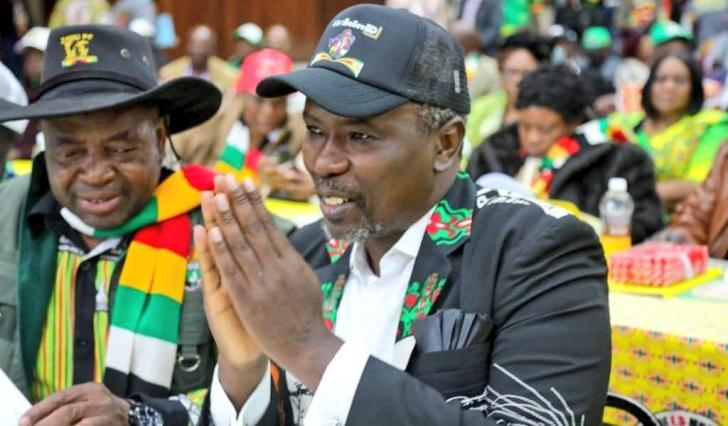
The political significance of Kudakwashe Tagwirei’s sudden arrival in Parliament should not be underestimated.
For years, Tagwirei was discussed as one of Zimbabwe’s most influential businessmen, a figure whose proximity to the centres of political and economic power generated intense public debate despite him holding no elected national office. Today, he sits in the Senate after being appointed by President Emmerson Mnangagwa under the constitutional architecture created by Constitutional Amendment No. 3.
Now reports of a possible cabinet reshuffle have inevitably raised another question: was the Senate merely the first destination?
No cabinet appointment has been officially announced, and speculation about which ministry Tagwirei could receive should not be confused with fact. But Zimbabweans do not need to speculate about what has already happened.
CAB 3 expanded the Senate and gave Mnangagwa the power to appoint ten additional senators on the stated basis of their professional skills and other competencies. Mnangagwa exercised that power. Tagwirei was appointed. He was sworn in. He is now formally inside Parliament.
That sequence deserves scrutiny because constitutional changes should always be judged not only by the language used to sell them, but by what those changes eventually make possible.
When CAB 3 was promoted, Zimbabweans heard grand language about strengthening constitutional governance, improving efficiency, bringing expertise into Parliament and promoting political stability.
Those claims can now be tested against reality.
Several of the people selected for the new Senate positions have significant ZANU PF backgrounds and connections. That inevitably raises questions about whether the new seats are functioning primarily as a mechanism for importing independent professional expertise into Parliament or whether political considerations are also shaping who benefits from them.
Tagwirei’s appointment is particularly significant because he is not simply a businessman with technical knowledge being invited to contribute to legislative debate. He is also a ZANU PF Central Committee member whose political profile has risen considerably.
That makes his transition fundamentally different from appointing an apolitical specialist whose career has largely existed outside partisan structures.
The constitutional question therefore intersects with a political one.
What exactly is being constructed?
Zimbabwe has been ruled by ZANU PF since independence in 1980. In such a system, any constitutional amendment that gives the President additional powers to appoint people into Parliament deserves especially careful examination.
Parliament is constitutionally supposed to hold the executive accountable. The more influence the executive gains over the composition of Parliament, the more important questions about institutional independence become.
That is why the ten Senate appointments matter far beyond the salaries, titles or personalities involved.
They represent power.
And Tagwirei’s journey demonstrates how quickly constitutional architecture can produce political consequences.
Before CAB 3, Tagwirei was outside Parliament.
After CAB 3, a new route into the Senate existed.
Mnangagwa appointed him through that route.
Today he is Senator Kudakwashe Tagwirei.
If he eventually enters cabinet, his transformation from politically connected businessman to formal executive office holder would be even more consequential.
There is nothing inherently unconstitutional about a businessman becoming a politician or minister. Nor does membership of ZANU PF automatically mean somebody lacks professional expertise.
The legitimate question is whether constitutional changes ostensibly justified by a need for professional expertise are being implemented consistently with that stated purpose, and whether adequate safeguards exist against political patronage.
Those questions become even more important because Tagwirei’s elevation is occurring in the middle of an increasingly sensitive succession debate within ZANU PF.
Mnangagwa cannot remain President forever.
At some stage, Zimbabwe will have another president, and ZANU PF itself will have another leader.
Vice President Constantino Chiwenga has long featured prominently in speculation about that transition because of his position in government, his military history and his role in the events of November 2017 that ended Robert Mugabe’s rule.
Other names have also entered succession discussions.
Tagwirei’s rapid political rise inevitably adds another dimension.
There is no publicly established evidence proving that Mnangagwa has designated Tagwirei as his successor. Claims that every political development surrounding Tagwirei forms part of an organised plan against Chiwenga should therefore be treated cautiously unless evidence emerges.
But dismissing Tagwirei’s rise as politically insignificant would be equally difficult.
A ZANU PF Central Committee member has moved into a presidentially appointed Senate seat created by a major constitutional amendment. Reports are now circulating about his possible elevation into cabinet.
That is a significant political trajectory regardless of what ultimately happens in the succession battle.
And it exposes a much bigger problem with Zimbabwean politics.
Too much of the country’s political future continues to revolve around internal ZANU PF arrangements.
Who does Mnangagwa prefer?
Who controls which faction?
Who is rising?
Who is falling?
Who will inherit the party?
Who will control the state after Mnangagwa?
Zimbabwe is reduced to watching the internal movements of one political organisation as though ZANU PF’s succession arrangements are synonymous with the future of the republic.
They are not.
Zimbabwe is bigger than ZANU PF.
The presidency is not an inheritance.
The state is not property to be transferred from one faction to another.
And Parliament should never become a waiting room through which politically connected individuals are positioned for greater power.
This is why the consequences of CAB 3 deserve continuing scrutiny.
The amendment was never merely about changing words in the Constitution. It altered important parts of Zimbabwe’s political architecture and expanded presidential influence in areas including the composition of the Senate.
There is also a live legal dispute over the amendment itself. Constitutional watchdog Veritas has argued that CAB 3 required approval through a referendum and has challenged the validity of its promulgation. That interpretation is contested, but its existence demonstrates how profound the constitutional controversy remains.
The danger in constitutional politics is that attention often disappears immediately after legislation passes.
People debate the Bill.
Parliament votes.
The President signs.
The headlines move elsewhere.
But the real consequences begin afterwards.
Appointments follow.
Institutions change.
New powers are exercised.
Political precedents are established.
What once appeared exceptional becomes normal.
That is precisely why Zimbabweans should continue asking what CAB 3 is producing rather than accepting what they were originally told it would produce.
The question is not whether Zimbabwe needs professional expertise in Parliament. It undoubtedly benefits from legislators with deep knowledge of economics, science, technology, health, agriculture, law, engineering and other important fields.
The question is why bringing such expertise into Parliament required giving an already powerful presidency another ten appointments, and how the public can objectively determine that the beneficiaries were selected primarily because of those competencies.
If these appointments are about professional excellence, the criteria should withstand public scrutiny.
If they are about strengthening Parliament, Parliament should become more independent and capable of holding the executive accountable.
And if CAB 3 was genuinely designed to improve governance, its consequences should strengthen institutions rather than deepen concerns about the concentration of presidential power.
Tagwirei’s rise therefore represents something larger than the political ambitions of one businessman.
It provides Zimbabweans with an early opportunity to examine what happens when constitutional change, presidential appointment powers, business influence, party politics and succession struggles begin to converge.
Whether Tagwirei eventually becomes a cabinet minister remains to be seen.
But one thing no longer requires speculation.
He has crossed the boundary from influence around political power into formal political power itself.
Zimbabweans are entitled to ask why, how, and what comes next.
Because constitutions should build institutions around the people, not political systems around the powerful.