
Zimbabwe’s democratic struggle stands at one of its most critical moments since independence. For years, millions of citizens believed political change was not only possible but inevitable. Despite electoral manipulation, state repression and an uneven political playing field, there was always a sense that a determined and organised opposition could eventually challenge ZANU PF’s grip on power.
Today, that confidence has largely disappeared.
The greatest crisis facing Zimbabwe’s opposition is no longer simply the strength of ZANU PF. It is the weakness of the opposition itself.
This reality is painful because the democratic movement once looked capable of fundamentally transforming Zimbabwean politics. When the Movement for Democratic Change (MDC) was formed in 1999, it emerged from genuine social and political struggle. It was not built around a single politician seeking office. It was supported by workers, students, churches, civic organisations, constitutional reform activists and ordinary citizens frustrated by years of economic decline and political repression.
The MDC possessed something that many opposition movements across Africa struggle to build: organisation.
Its structures stretched from national leadership to grassroots communities. It had internal systems, recognised procedures and a clear political identity. Most importantly, it represented a broad coalition of Zimbabweans united by a common desire for democratic change.
That organisational strength is precisely what made the MDC such a serious threat to ZANU PF.
The party’s rise was closely linked to the leadership of Morgan Tsvangirai. He became a symbol of resistance and hope for millions of Zimbabweans. Whether one agreed with all his political decisions or not, Tsvangirai understood the importance of building a movement that extended beyond his own personality.
His death in February 2018 marked a turning point from which the opposition has never fully recovered.
Instead of consolidating the movement he helped build, senior leaders became consumed by succession battles and internal rivalries. The public witnessed endless disputes involving Nelson Chamisa, Thokozani Khupe, Douglas Mwonzora, Welshman Ncube, Elias Mudzuri and Tendai Biti. Energy that should have been directed towards challenging ZANU PF was redirected into fights over leadership positions and organisational control.
The consequences were devastating.
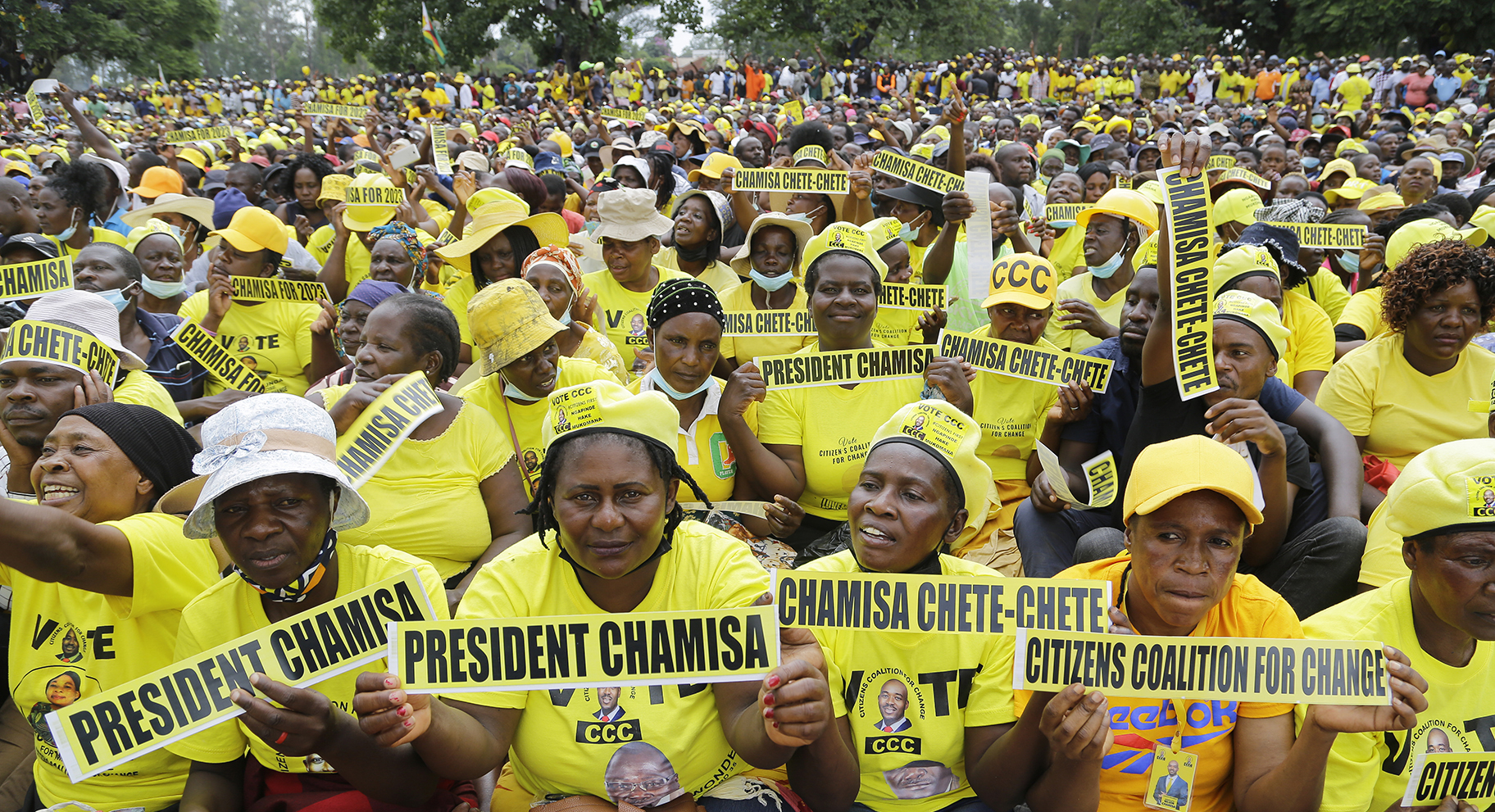
Although Chamisa quickly emerged as the most popular opposition figure, popularity alone could not compensate for the erosion of institutional strength. The 2018 election demonstrated both the potential and limitations of personality-driven politics. Chamisa mobilised large crowds and generated enormous enthusiasm, particularly among young voters. Yet when the election outcome was disputed, the opposition struggled to effectively challenge the result through legal and institutional channels.
A political movement requires more than passion. It requires preparation.
When the Constitutional Court challenge failed, many supporters blamed the judiciary and state institutions. While concerns about judicial independence were understandable, the episode also highlighted weaknesses within the opposition itself. Effective election challenges require organisation, documentation, legal preparation and evidence collection. Excitement cannot replace systems.
The crisis deepened further in 2020 when court rulings effectively stripped Chamisa’s faction of control over the MDC’s legal structures, assets and state funding. The subsequent recalls of Members of Parliament and councillors severely weakened the opposition’s parliamentary presence and organisational capacity.
Faced with these setbacks, the response was not institutional rebuilding but reinvention.
The launch of the Citizens Coalition for Change (CCC) in 2022 generated fresh excitement and renewed hope. New colours, new branding and a new political identity energised supporters once again. Yet beneath the enthusiasm, fundamental questions remained unanswered.
What were the structures?
What were the internal systems?
How would the movement protect itself from infiltration, manipulation and legal challenges?
Those questions became even more important after the events surrounding Sengezo Tshabangu and the collapse of the CCC’s organisational coherence.
Meanwhile, ZANU PF continued doing what it has always done best: protecting power through organisation. The ruling party’s electoral dominance is not sustained by popularity alone. It is sustained by structures, networks, resources, institutions and long-term strategic planning.
Many Zimbabweans understandably focus on ZANU PF’s abuses and failures. However, acknowledging those failures does not remove the opposition’s responsibility to build a credible alternative.
The uncomfortable truth is that democratic change cannot be built on personalities alone. Charisma may attract supporters, but institutions sustain movements. Crowds may create momentum, but structures protect political gains.
A fragmented and disorganised opposition does not threaten ZANU PF. It serves its interests.
If Zimbabwe’s democratic forces are serious about challenging authoritarianism, they must move beyond endless political resets and begin rebuilding durable institutions capable of surviving individual leaders, legal attacks and internal disputes.
Until that happens, the ruling party will continue governing with little reason to fear those who seek to replace it.
The future of Zimbabwe’s democracy depends not only on confronting ZANU PF, but on rebuilding an opposition strong enough to defeat it.
The biggest lesson here is that strong political movements are built on institutions, not individuals. Charismatic leaders can inspire people and fill stadiums, but without solid structures, clear succession plans and functioning internal systems, any movement becomes vulnerable when challenges arise. Zimbabwe’s opposition has paid a heavy price for failing to strengthen its foundations.
Strong institutions protect movements from internal conflicts. When clear rules exist, leadership transitions become more predictable and disagreements are easier to manage. Without those safeguards, personalities begin dominating everything, making every dispute feel like a crisis that threatens the entire organisation.
Morgan Tsvangirai left behind a movement that had real organisational depth. After he passed away, it became increasingly difficult to keep everyone united around common goals. The internal battles that followed consumed valuable time and energy that could have been directed towards strengthening the opposition and preparing for future elections.